
Bur Oak
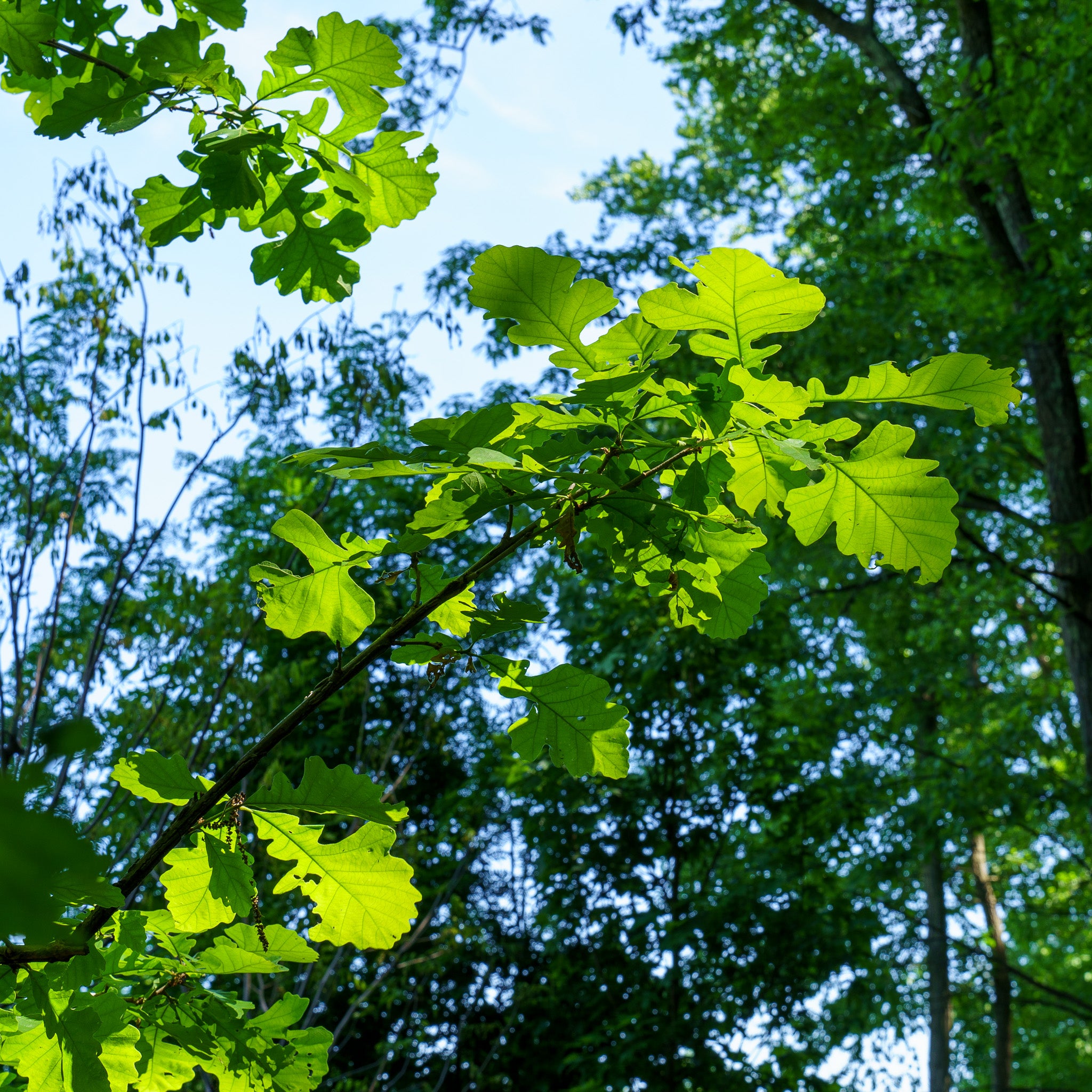
The Bur Oak (Quercus macrocarpa) is a large deciduous tree native to North America. It is known for its rugged and majestic appearance. The tree typically reaches a height of 70 to 100 feet with a spread of 80 to 100 feet, forming a broad and spreading crown. The Bur Oak has a thick, deeply furrowed bark that becomes rough and scaly with age. Its leaves are large, up to 8 inches long, and have distinctive lobes with wavy margins. In the fall, the leaves turn shades of yellow, bronze, and brown, adding to the tree's ornamental appeal. One of the distinguishing features of the Bur Oak is its large acorns, which can measure up to 2 inches in length. The acorns are enclosed in a fringed cap and are an important food source for wildlife. The Bur Oak is a hardy and adaptable tree, capable of thriving in a wide range of soil types, including clay and sandy soils. It prefers full sun exposure but can tolerate some shade. Bur Oaks are often planted as shade trees in large landscapes, parks, and along streets. They provide excellent shade and can withstand urban conditions. Additionally, Bur Oaks have ecological importance as they support various bird and mammal species by providing food and habitat.
Storage: Refrigerated